


Calculate gear module - measure spur gear correctly and create replacement gear
A defective gear wheel is a common problem with Machines, Household appliances, modelbau or DIY projects. The original spare part is often no longer available. In many cases, however, you can order a new Rebuild spur gearif the most important dimensions are known.
In this guide, we show you in detail how to create a measure a gear correctlyhow you do that Calculate module which values you need for this and how you can create a Ersatz gear is created. You can then use your Stirnrad with Involutverzahnung configure directly online.
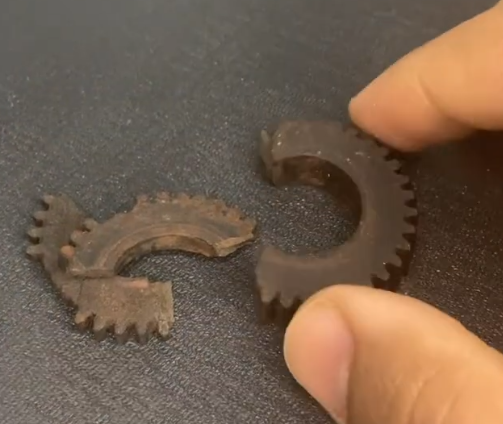
Why do gears break?
Gears constantly transmit forces and movements. Depending on the material, load and duration of use sooner or later there will be wear or breakage. Especially Kuststoffzahnräder in older appliances or gearboxes are often affected. If you want to replace a broken gear, you first need to correctly record the most important dimensions.
- materialermüyoung
- Overload in the gearbox
- Aging of plastic gears
- missing lubrication
- Blocking the gearbox
- misalignment or uneven loading
Which dimensions do you need for a gear?
In order to Ersatz gear only a few basic values are required to create a spur gear. These dimensions define the geometry of a spur gear and are decisive for whether the new gear will later run smoothly with the mating gear.
- Number of teeth – Number of teeth
- Outer diameter – Overall diameter across the tooth tips
- Width – axiale thickness des gears
- Bore diameter – Hole for the shaft
- module - most important parameter for tooth pitch
If these values are known, a straight spur gear with involute teeth can often be recreated very quickly. In your case, you can set the module, number of teeth, width, Drill hole and optional Hub directly in the configurator.
How to measure a gear correctly, step by step
To measure a gear, it is usually sufficient to use a Caliper. It is important to measure cleanly and, if possible, in undamaged areas. If individual teeth are missing, the remaining measurements can often still be reliably determined.
1. Count number of teeth
Count all the teeth once all the way around. The Number of teeth is a central value for the later calculation of the module and for the geometry of the new spur gear.
2. Measure the outer diameter
Measure the Outer diameter over the tips of the teeth. This value is used together with the number of teeth to determine the module.
3. Measure the gear width
The Width is the axial thickness of the gear. It influences the load capacity, power transmission and installation situation.
4. Measure the bore
Measure the diameter of the Center hole. This hole is important so that the gear wheel later sits correctly on the shaft or axle.
5. Optional: Consider hub
Some gears have a Hub. This provides more material in the bore area and can be important if clamps, grub screws or a more stable installation are planned. The hub can be optionally activated in the configurator.
Calculate module of a gear
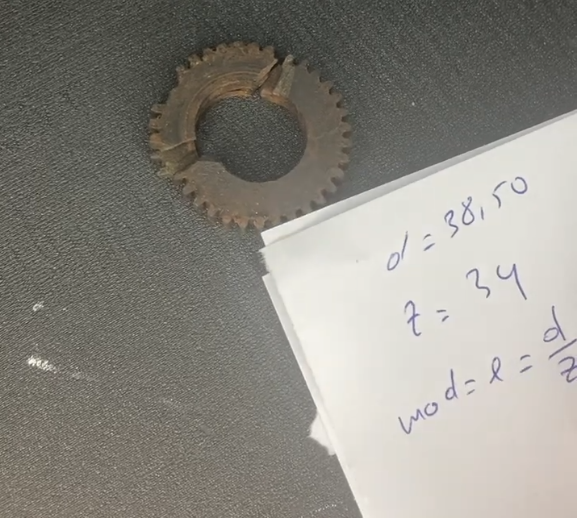
The module is the most important parameter of a gear. Only gears with the same module can work properly together. So if you have a Replace spur gear, a Custom gear ? individually configurable 3D model or a new Involut gear configure must know the module.
With a normal straight spur gear, the module can be removed from Outer diameter and Number of teeth calculate:
Module calculation formula
Module = outer diameter / (number of teeth + 2)
Example
- Number of teeth = 30
- Outer diameter = 32 mm
- module = 32 / (30 + 2)
- module = 1
So you know: The gear wheel has module 1. Exactly this value can then be entered in the spur gear configurator.
Common mistakes when measuring gears
- Not measuring the outer diameter across the tooth tips
- Count the wrong number of teeth
- Accept damaged areas without checking
- Measuring the bore inaccurately
- Confusing module with pitch circle diameter
If you measure accurately and apply the formula correctly, in many cases you will very quickly arrive at a useful result for a new spur gear.
Typical spur gear modules
Many gears are based on standardized module sizes. Typical values are
- 0.5
- 0.8
- 1
- 1.5
- 2
- 2.5
- 3
Especially for small gearboxes, model making, household appliances and repairs often module 0.5, module 0.8 or module 1.
Configure an involute spur gear now
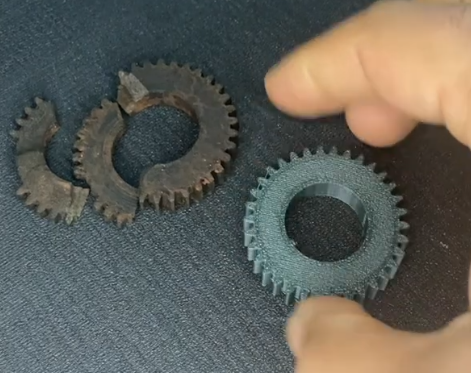
When module, Number of teeth, Width and bore have been determined, a new gear can be generated. This is exactly what the Stirnrad_Involut configurator thought.
The following values can be set there:
- module (mm)
- Number of teeth
- width (mm)
- bore (mm)
- Optionally enable or disable the hub
The model generates a straight spur gear with involute teeth and is suitable for mechanical engineering, repairs, DIY projects and 3D printing.
Replace a broken gear
Once you have determined the number of teeth, outside diameter, width and bore, you can configure your new spur gear directly online.
FAQ - Calculate gear module
How calculated man das module eines gears?
With the formula Module = outer diameter / (number of teeth + 2). To do this, you need the outside diameter and the number of teeth of the gear.
Which dimensions matter for a spur gear?
The most important values are Number of teeth, module, Width and bore.
Can a broken gear ersetzen?
Yes, in many cases a damaged or broken gear can be measured and recreated as a replacement part.
Can gears be produced using 3D printing?
Yes, especially for repairs, prototypes and many technical applications 3D-printed gears are often a viable solution.
What is it?
A spur gear with involute toothing is a straight gear with a technically proven tooth form, which is very common in mechanical engineering.
What information can I enter in the configurator?
In the configurator for Spur gear_Involut you can set the module, number of teeth, width, bore and optionally a hub.
Configure spur gear now
Have you already determined the dimensions? Then start directly with the configurator and create your Involut spur gear online.